Electric silage spreader machine
| Brand | Taizy |
| Engine type | Electric |
| Model | SL-3 |
| Volume | 3m³ |
| Motor | 3kw |
| Driving speed | ≤ 20km/h |
You can now ask our project managers for technical details
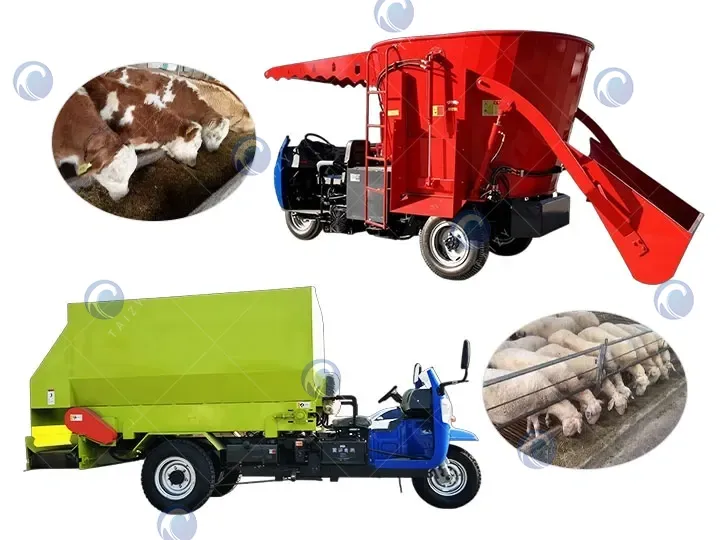
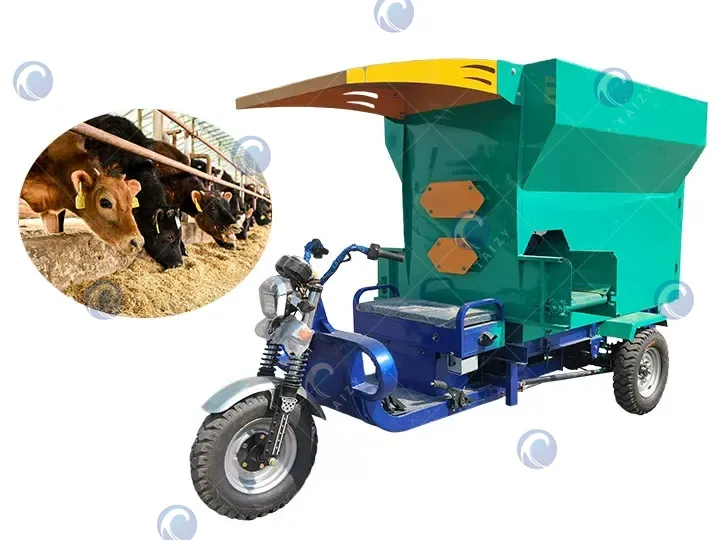
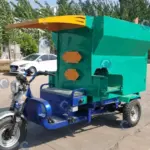
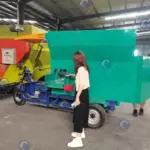
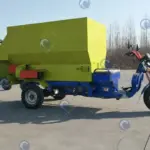
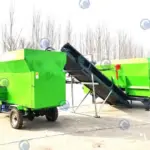
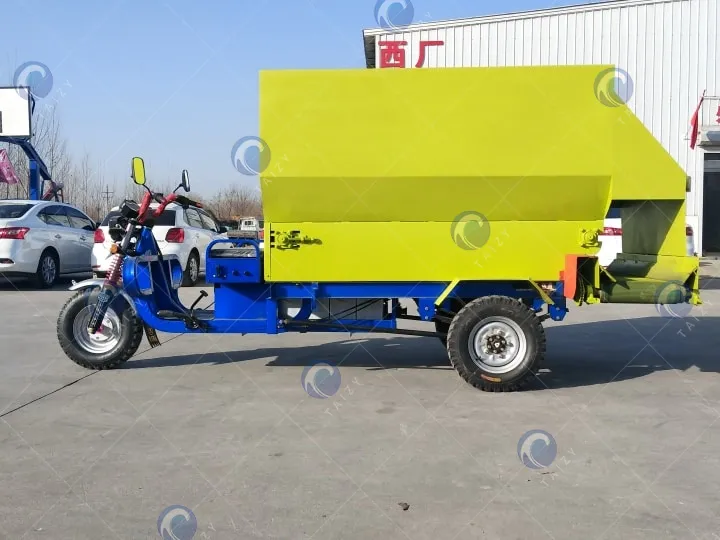
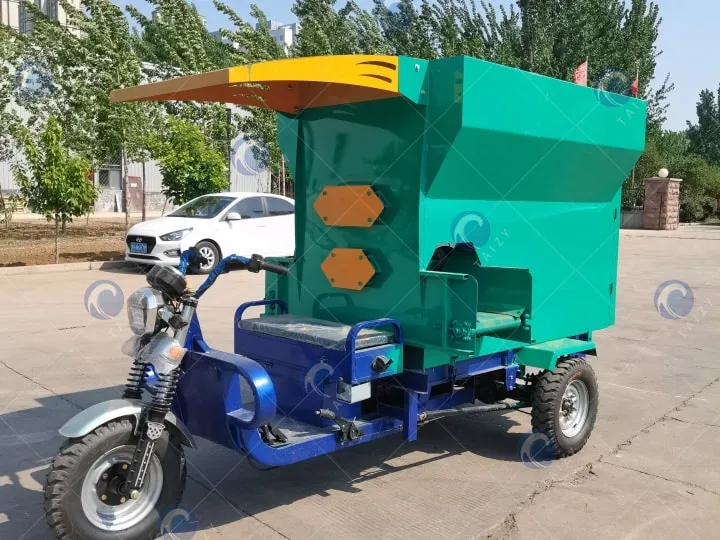
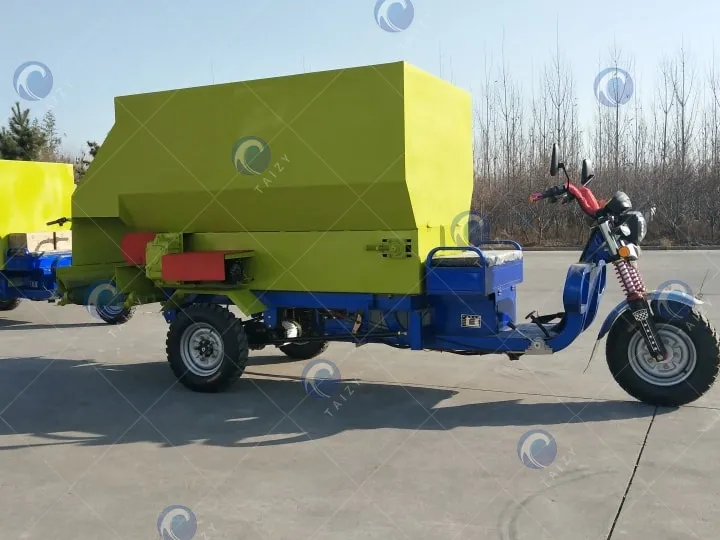
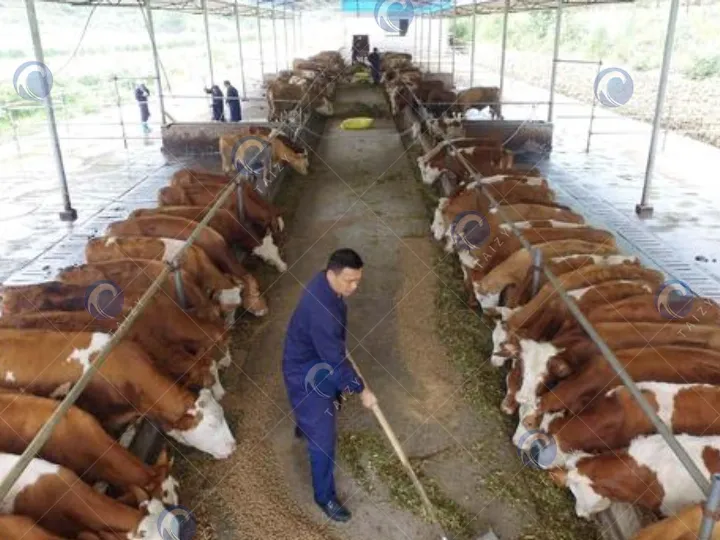
The electric silage spreader machine is designed for feeding silage and forage to cattle and sheep. The most popular model features a 3m³ capacity and can complete a distribution cycle in 2–3 minutes.
Our silage spreading vehicle enables rapid, uniform feed distribution and can travel at speeds of up to 20 km/h. It is designed for transporting pre-mixed feed and works well with the TMR silage blender and mixer.
Key features of electric feed distribution vehicles
- Low operating cost: Powered by batteries, the silage spreader does not require diesel fuel, helping reduce operating expenses.
- Independent left/right discharge: The silage spreader machine can discharge feed from either the left or right side as needed, making feeding more flexible and efficient.
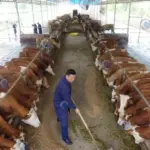
- Suitable for enclosed barns: Electric drive means zero exhaust emissions, making it more environmentally friendly for use in enclosed or semi-enclosed barns.
- Enkel drift: The control and operating systems are straightforward, allowing operators to become proficient with only basic training.
- Lower noise levels: The electric siage spreader machine operates quietly, helping to maintain a stable environment for the livestock.

Two available battery configurations
To meet the diverse needs of our users, our sialge spreader machines are available with two battery options.
- Maintenance-free model (Lead-acid battery): Equipped with maintenance-free lead-acid batteries, this model requires no frequent servicing and offers stable and reliable performance.
- Standard model (Lithium battery): Powered by lithium batteries, this model features a lightweight design, rapid charging, and a long cycle life.
Application scenarios for silage spreader machine
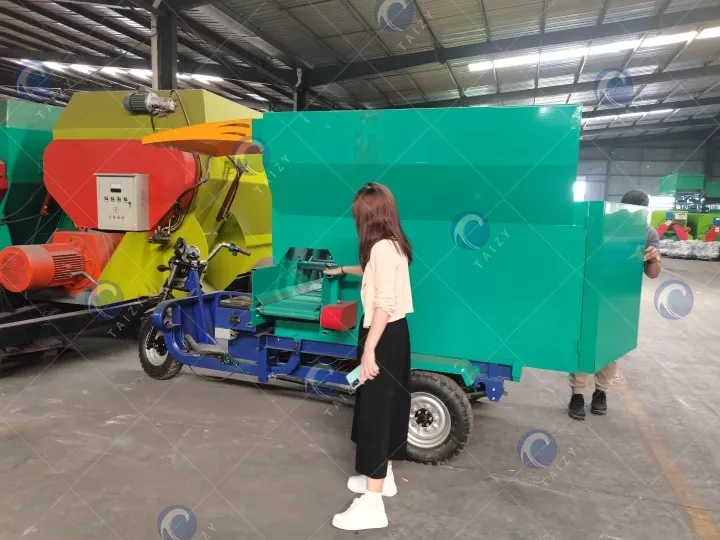
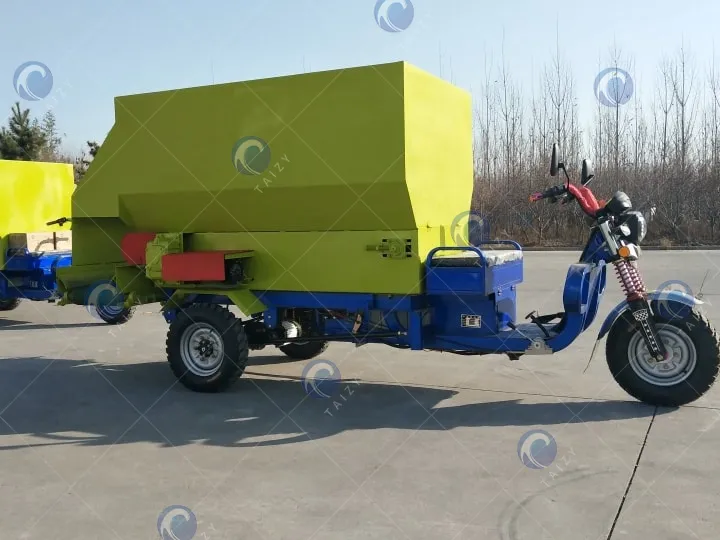
Taizy sialge distribution wagons are suitable for:
- Shamba za maziwa
- Shamba za ng'ombe wa nyama
- Shamba za kondoo
- Livestock cooperatives
- Large-scale farming operations
The electric silage spreader machine is particularly well-suited for farms that already utilize TMR (Total Mixed Ration) mixers and wish to further improve feed distribution efficiency.
Technical parameters of electric silage spreader
| Kitu | Uainishaji |
|---|---|
| Model | SL-3 |
| Capacity | 3 m³ |
| Ukubwa wa jumla | 3600 × 1300 × 1950mm |
| Maskinvikt | 1000kg |
| Feeding structure | Screw conveyor |
| Mfumo wa nguvu | 6 batteries, 72V |
| Motorkraft | 3kw |
| Discharge system | Dual-side outlet (left or right side selectable) |
| Outlet height from ground | 700mm (customizable) |
| Ufanisi wa kazi | 2–3min/batch |
| Driving speed | ≤ 20km/h |
| Driving range (No load) | 60km |
| Charging voltage | 220V / 50Hz |
| Charging time | 6–8hours |
| Brake system | Rear foot brake |
Ideal partner for electric silage spreader
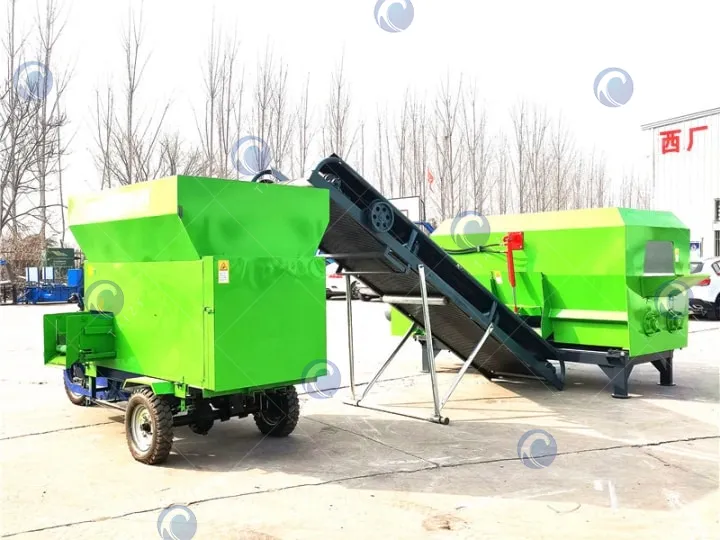
In modern dairy farms, the electric silage spreader machine is typically used in conjunction with the TMR silage blender and mixer. The typical workflow is as follows:
- The TMR mixer blends ingredients such as forage, silage, and concentrates.
- The mixed feed is loaded into the electric feed distribution wagon.
- The wagon travels along the barn aisle.
- The feed is evenly distributed into the feed bunks.
This operational method effectively improves feeding efficiency and reduces manual labor intensity, while ensuring the herd receives a more uniform ration.
FAQ for electric silage spreader machine
What is the discharge method for the electric feed spreader?
This equipment features bilateral discharge. Customers can select discharge from either the left or right side via the control system.
Does the electric silage spreading truck have mixing or crushing capabilities?
It does not have that function. This electric silage spreader is only used for transporting and distributing pre-mixed feed. Our diesel-powered feed spreader can crush and mix materials.
Can the battery type be selected?
Yes. Options include maintenance-free dry battery and lithium battery versions. Users can choose based on their budget, usage frequency, and charging conditions.
Can the spreading height be customized?
The discharge height can be customized according to the height of the feed troughs, ensuring precise feed delivery and minimizing waste.
How long does it take to charge an electric feed spreader?
The standard charging time is 6–8 hours, and charging can be done using a standard 220V household power supply.
Contact us right away!
The silage spreader machine offers modern livestock farms a more efficient, energy-saving method for dispensing feed, helping users reduce manual labor while enhancing the consistency and accuracy of daily feeding operations.
If you are looking for feed distribution equipment suitable for your farm, or wish to learn more about the various configurations and machine types available, please feel free to contact us. We can provide detailed selection advice and price quotes tailored to your specific operational needs.